I just attended my first non-math, non-STEM conference: the annual international gathering hosted by the Association of Children’s Museums (ACM). As part of the MathHappens Foundation‘s booth, I had a front row seat to the newly emerging movement of introducing math into Children’s museums. The enthusiasm for math education I found among the museum staff was a breath of fresh air given the current concerns with math literacy. There were numerous requests from museums for MathHappens materials and partnership— and MathHappens is already in 46 locations nationwide!
What type of math learning can take place at a children’s museum? If there is one word I could use based on my experience at the New Children’s Museum, it would be exploration. Here are some of the types of explorations that I have witnessed
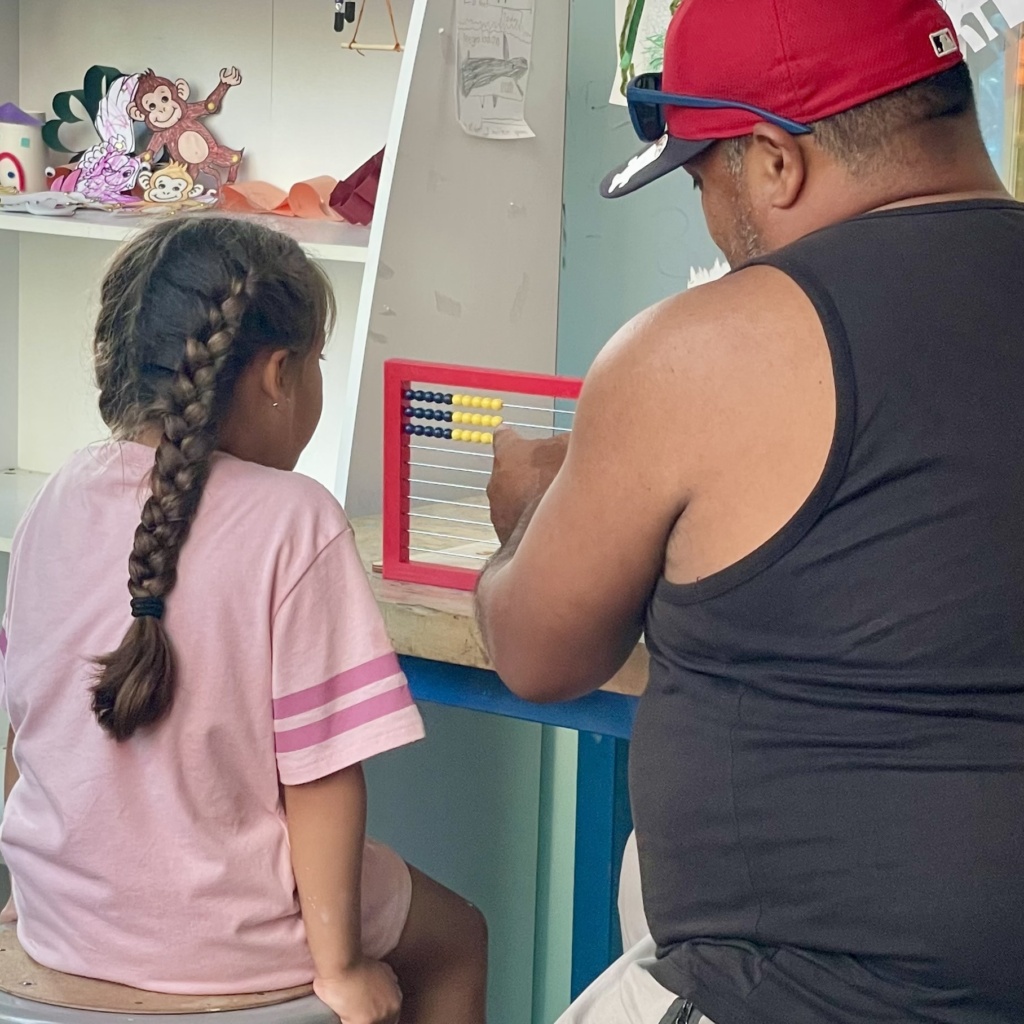
- Exploring a familiar subject, such as counting, using a new tool (abacus) and in a new context (with a parent)
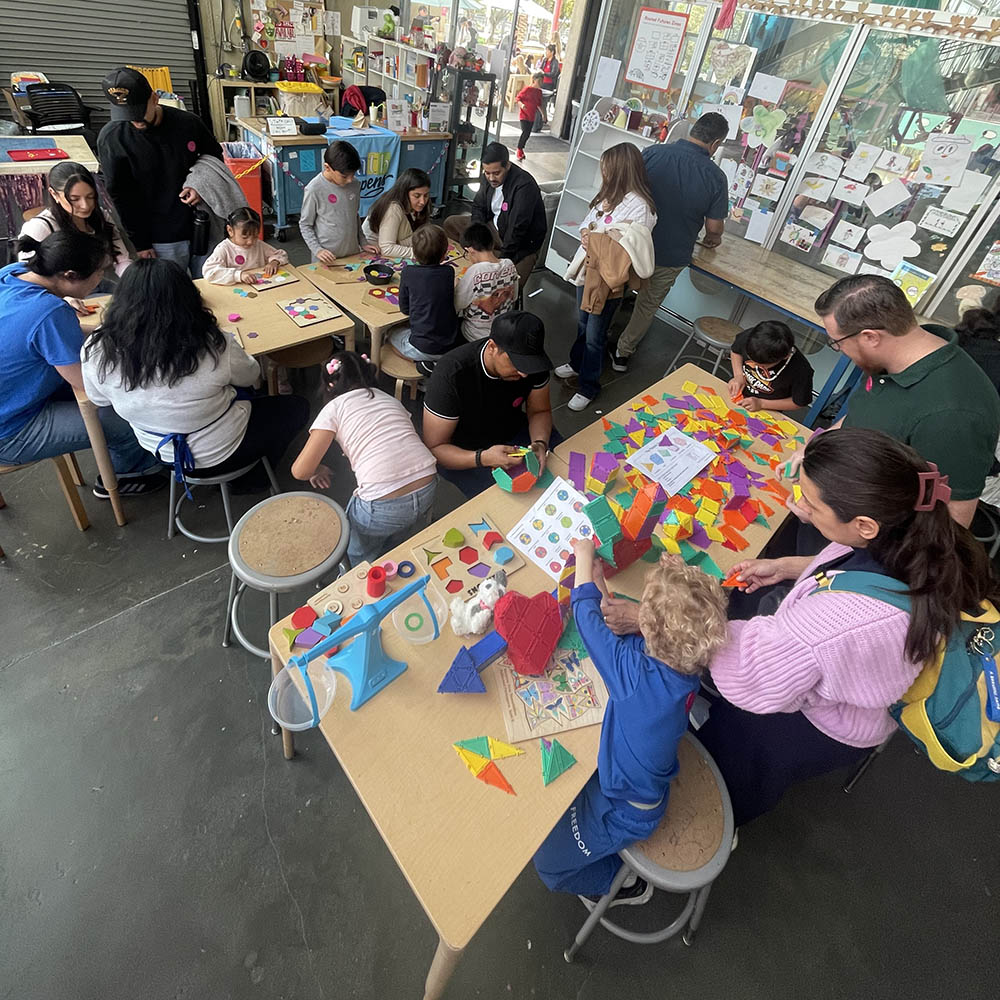
- Learning how to make new 2- and 3-dimensional shapes from simpler shapes
- Watching your parent be really stumped by a math puzzle and still persist at doing it.
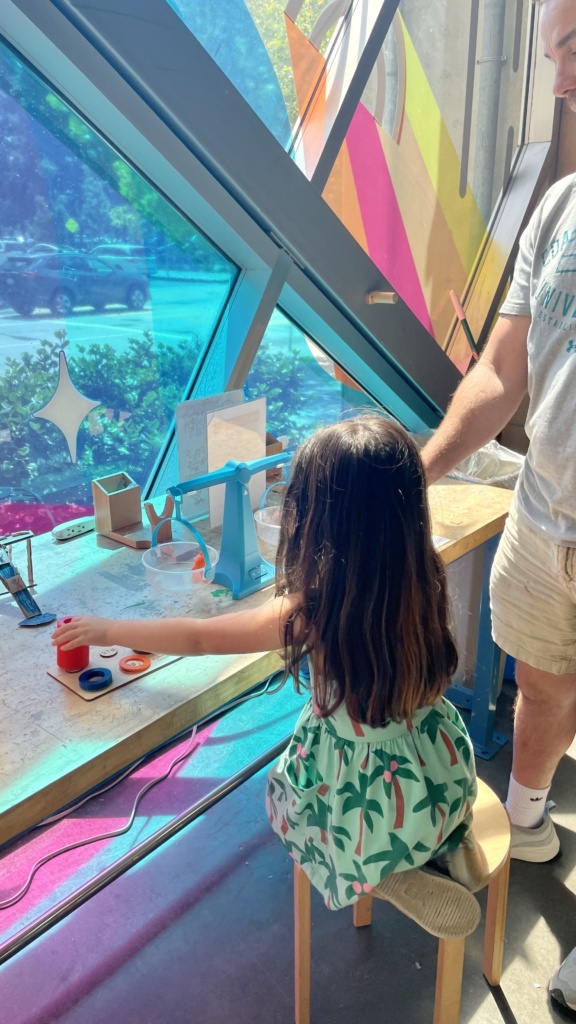
- Learning that the numbers you learn in school actually correspond to weights that you can feel.
The museum setting is a perfect place for such explorations. Unlike the classroom, there is no pressure to follow a set curriculum. With carefully curated hands on math materials, a child can’t go wrong by simply following their natural curiosity. No math background is required for staffing such math spaces. All that is needed is a willingness to explore and a love for interacting with families— these are qualities usually found in museum educators.
Another thing I learned at the ACM conference is that museum educators are often experienced crafters. This means that they have personal experience with perseverance in problem solving— after all, most crafts require some quantitative or logical reasoning to produce a quality object. What better people to teach problem solving than those who can model it themselves!