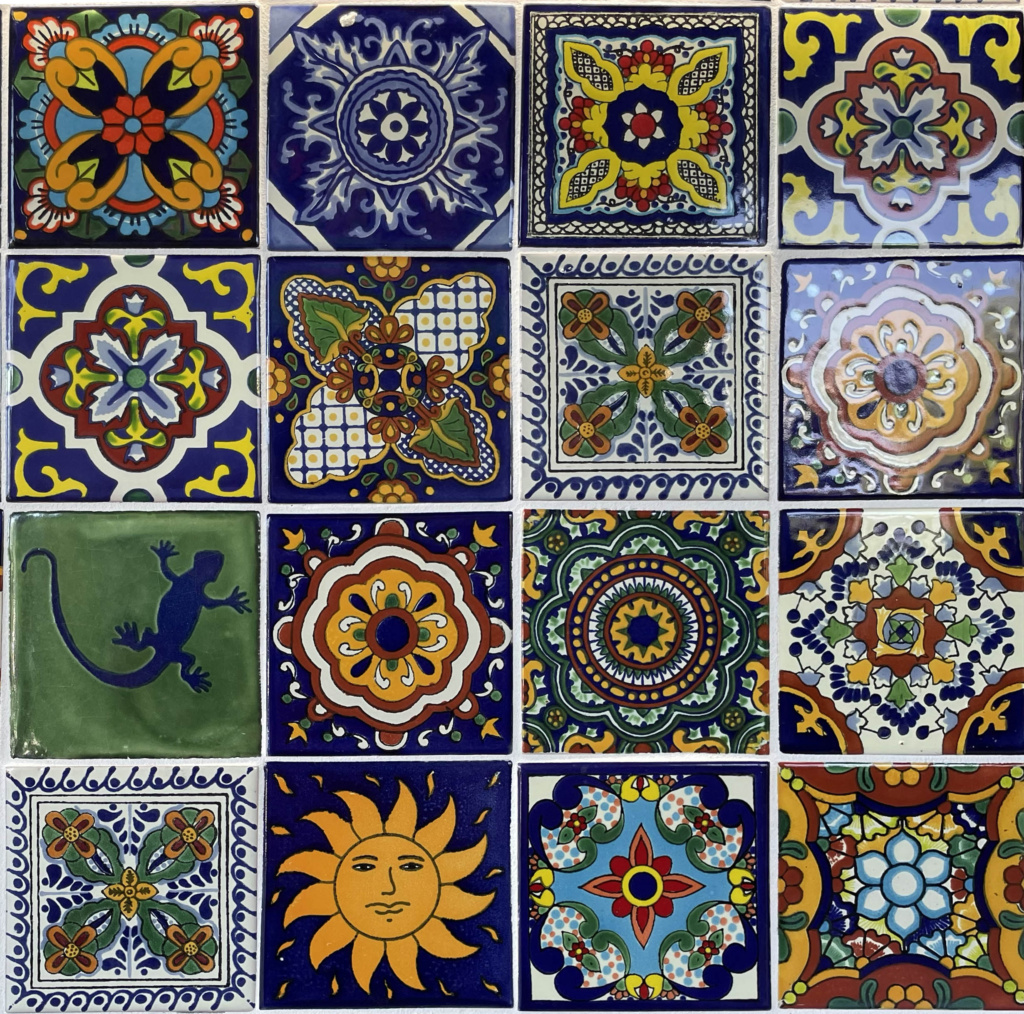
During a recent stop Los Tacos in Temecula, California, I saw the striking and cheerful assorted tiling pictured above. Based on a cursory look most tiles appeared to have 4-fold mirror symmetry, like the one below.
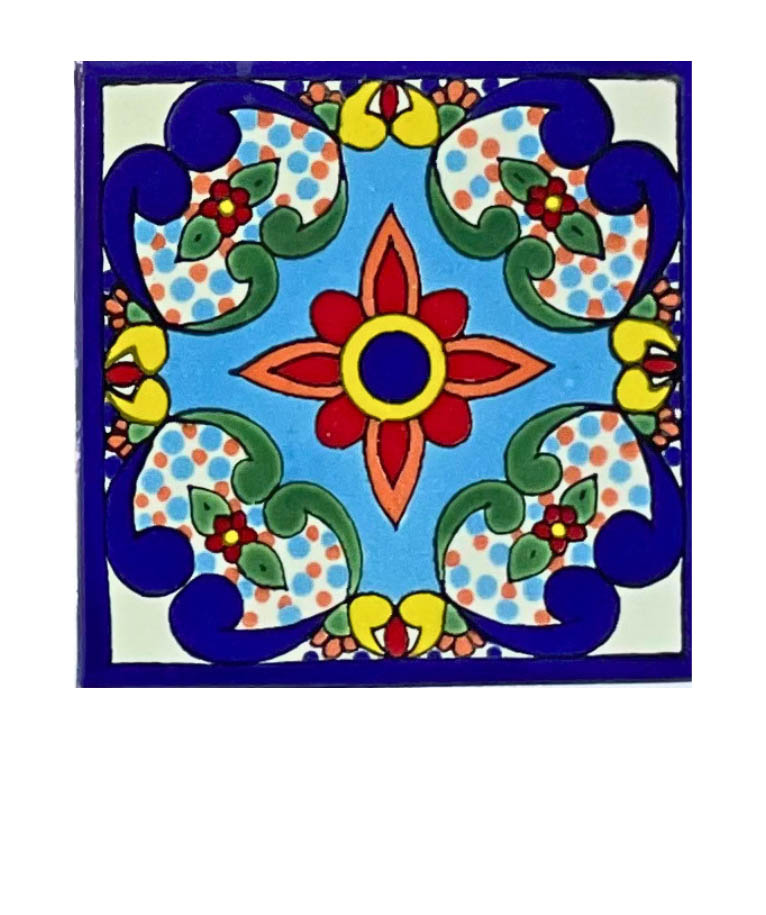
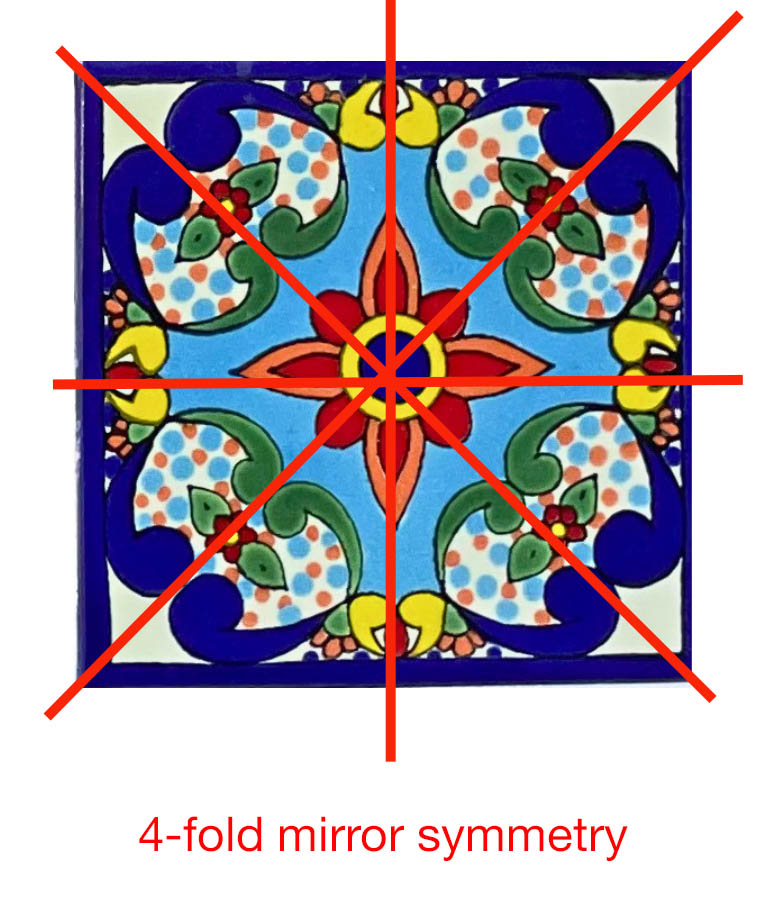
After lunch, I took a closer look at the pictures of the tiles and found some surprises. Not only did many tiles not have 4-fold symmetry, but they had some interesting subtleties that added a twist to the determination of their symmetry type.
Take, for example this tile:
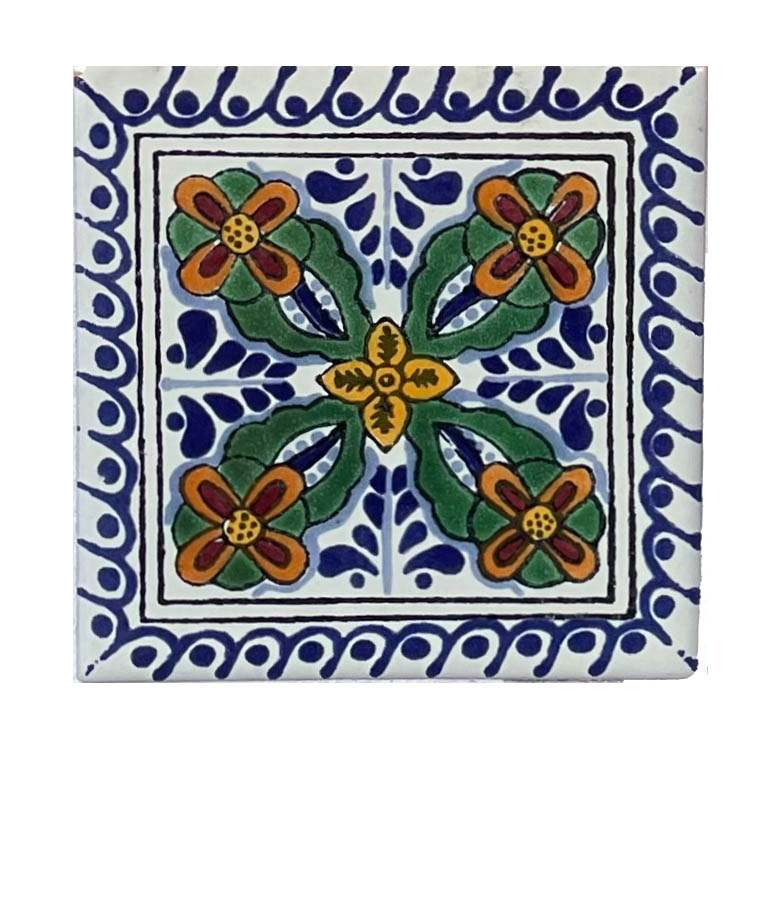
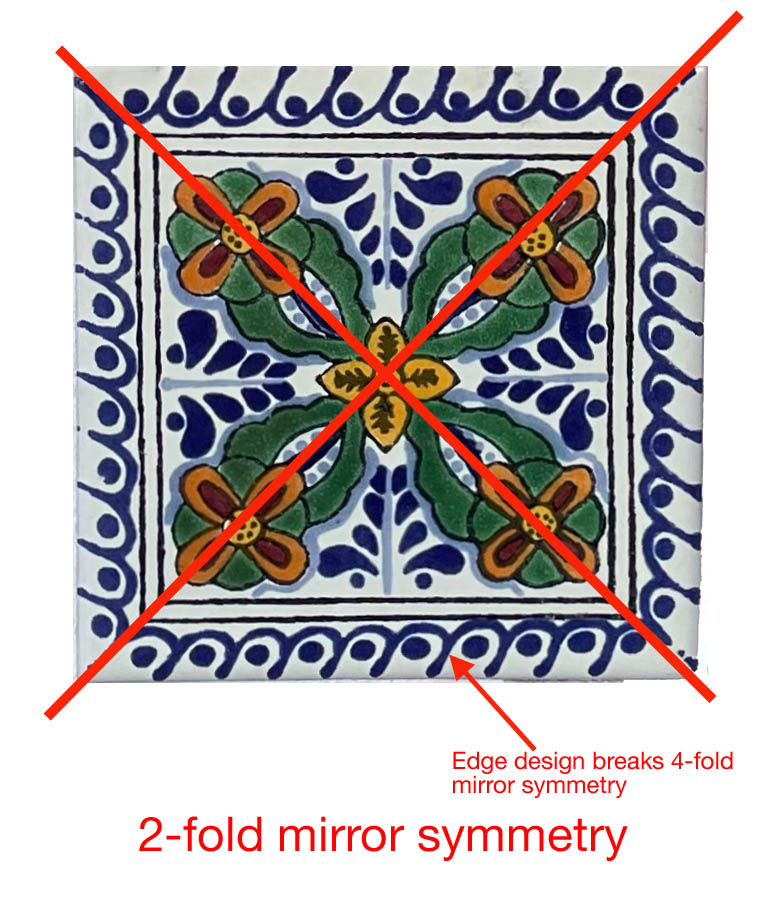
This tile might appear to have 4-fold mirror symmetry, but the edge design breaks it. When considering the symmetry of these tiles, we look at the entire tile.
Here is another interesting example:
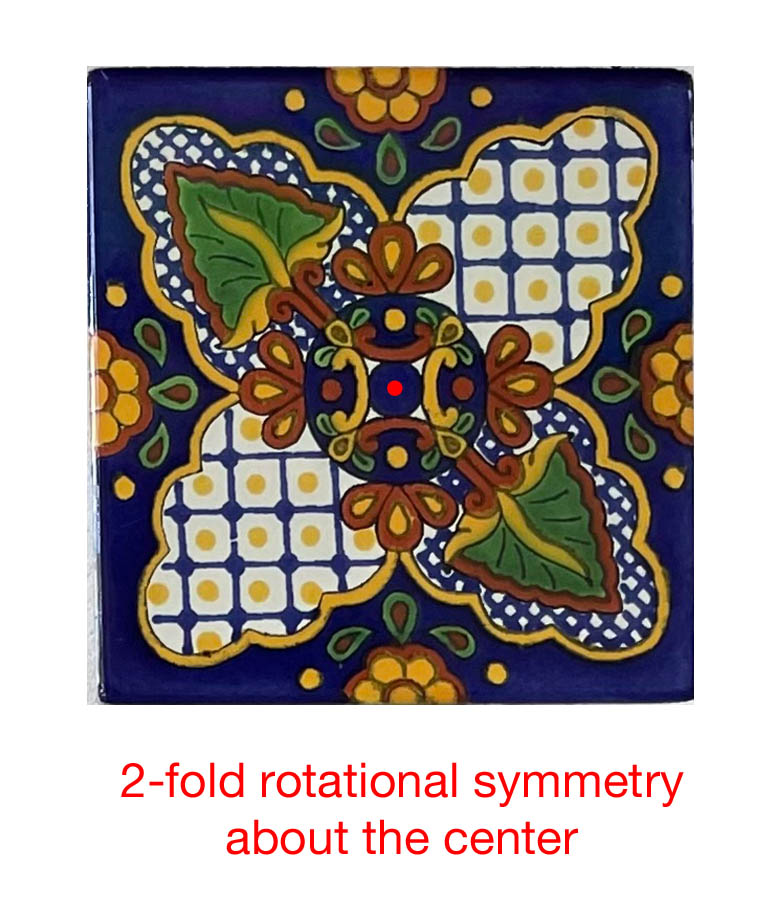
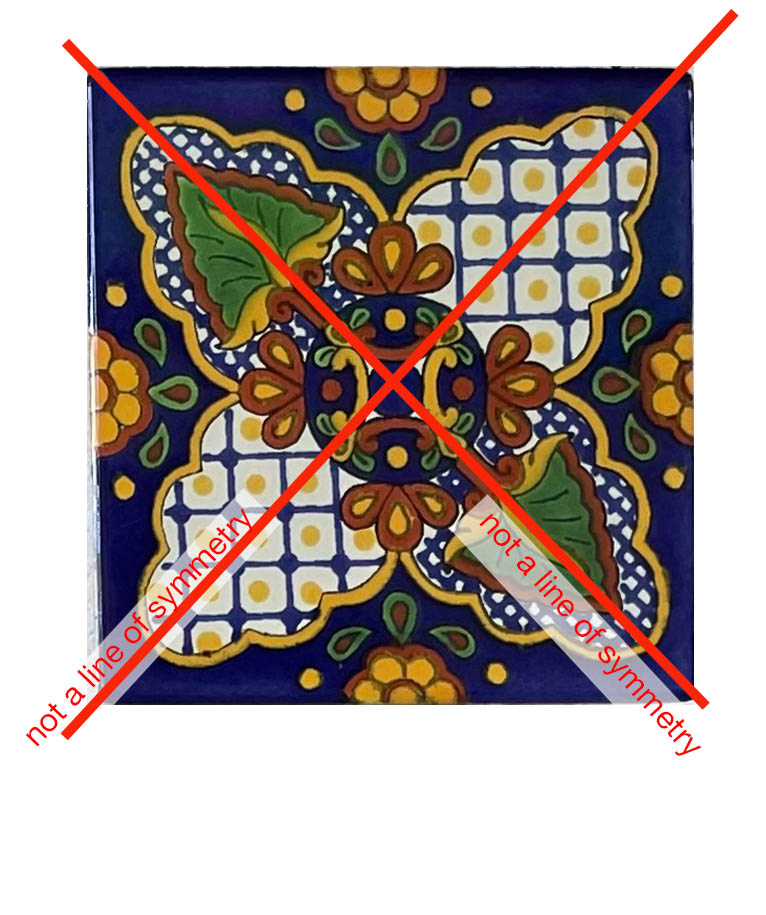
It may be tempting to think that there is symmetry about the diagonals, as in the second picture on the right. However this is not the case. There is only a 2-fold rotational symmetry about the center, indicated with a red dot in the picture above. That means that if you spin the tile about the red dot so that it’s upside down, it looks exactly the same as before.
This is a nice symmetry activity you can play around with while waiting for your order — or in between bites. Noticing the details of the tiles is a fun challenge for children. There is also an art history component. This type of tiles have dates back to several hundred years ago to Spain, where they evolved from both the Roman tradition of mosaics and the Moorish pottery. They then traveled to Mexico. Fortunately, the tile tradition in California and the western states is alive and well, long after they have become part of the United States.