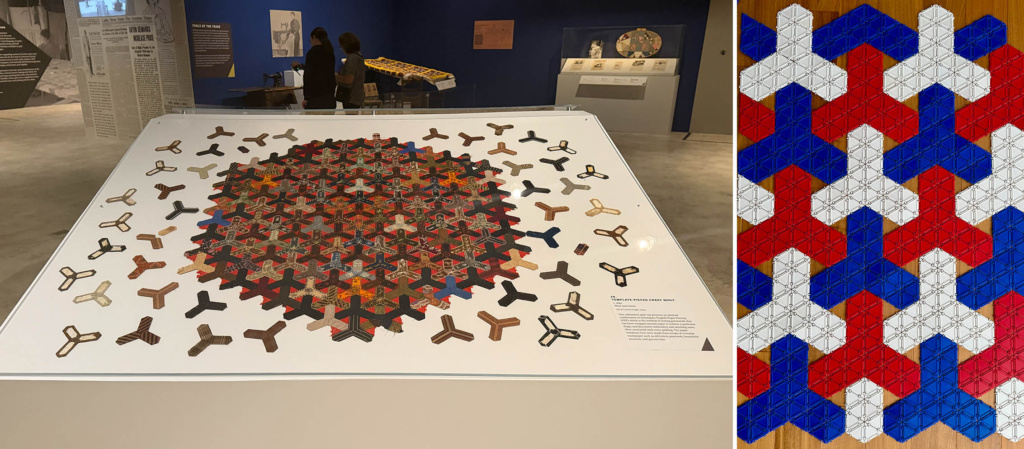
I was at the Bowers Museum this weekend, at the newly opened exhibit entitled “The American Quilt: Cloth and Commerce”. While the exhibit is focused on the materials used for the quilts and their relationship to historical events of the time, I found the mathematics behind the patterns quite interesting. The pattern that really caught my eye was this unusual “Crazy Quilt” from around 1890:
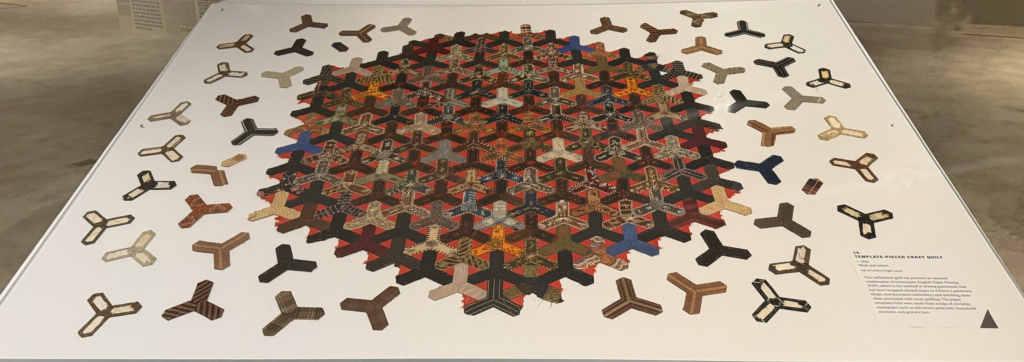
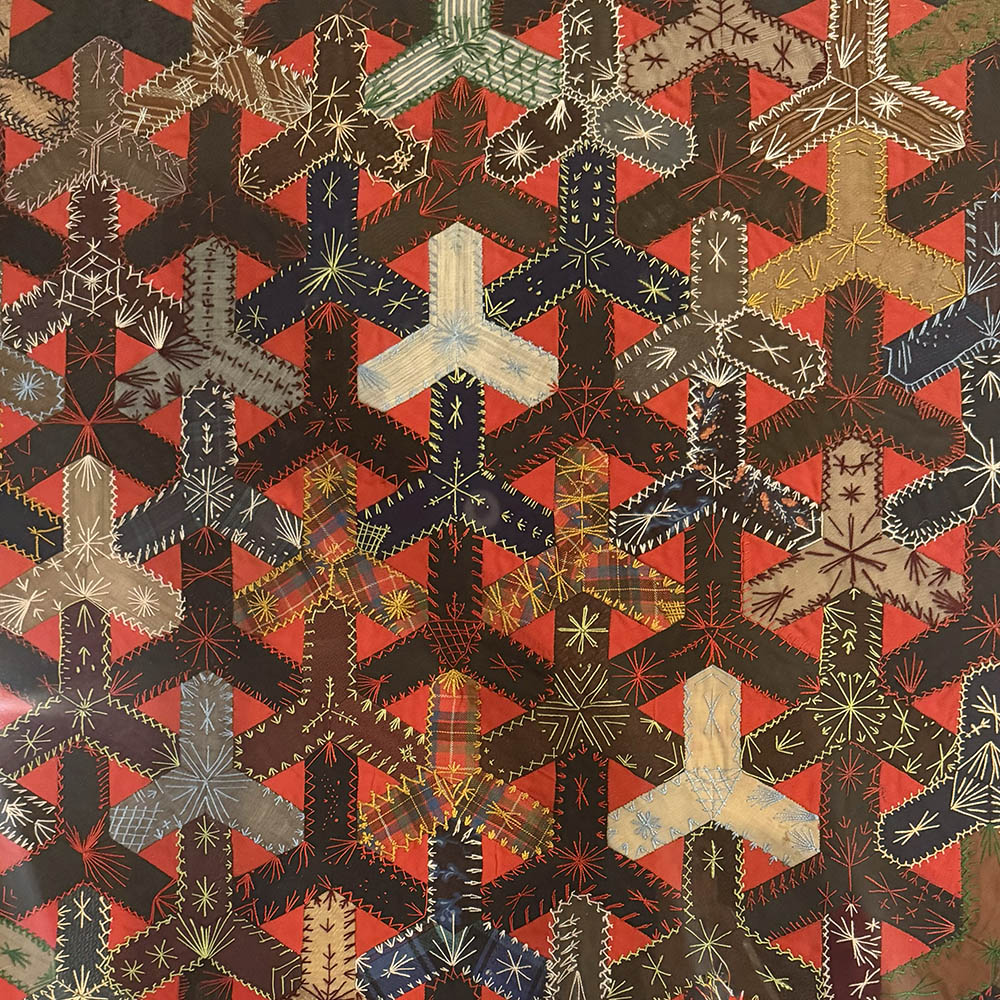
Fortunately, the quilt was unfinished, and you can see the Y-shaped pieces that it was sewn from on the left picture above. (In case you are wondering why it’s called “crazy”, that has to do with the embroidery on each piece, the unusually shaped building blocks, and the rich variety of fabrics used).
I kept seeing at least two distinct hexagonal lattices in this quilt, but the “craziness” of the design was distracting me. When I got home, I made my own replica with Geometiles:
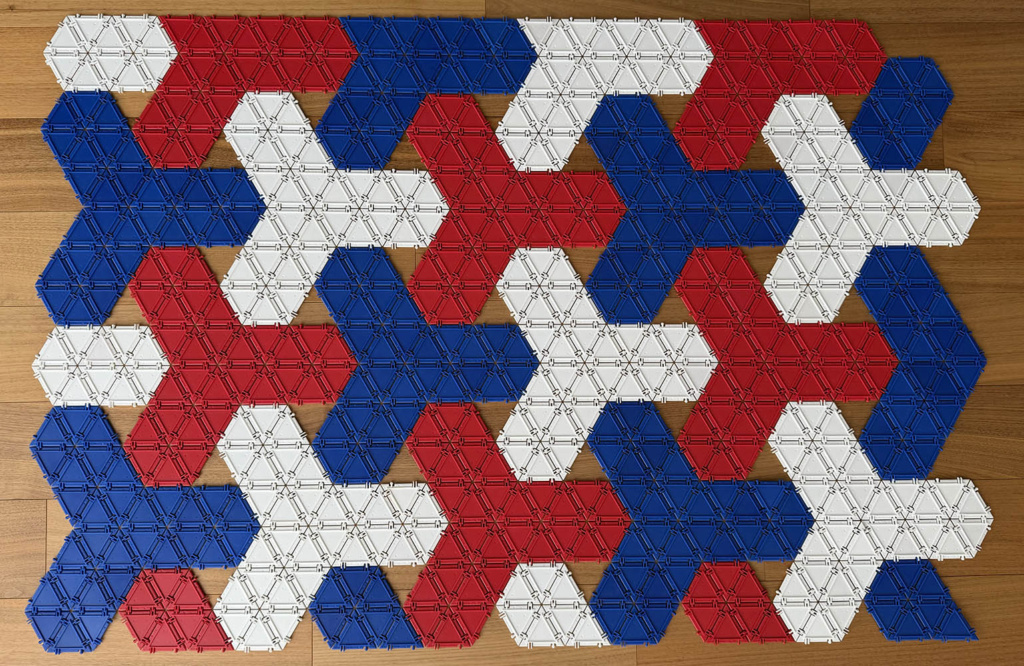
You can see that the pattern is a projection of an entanglement of three hexagonal nets: red, white, and blue. Below you can see the white lattice outlined in light green.
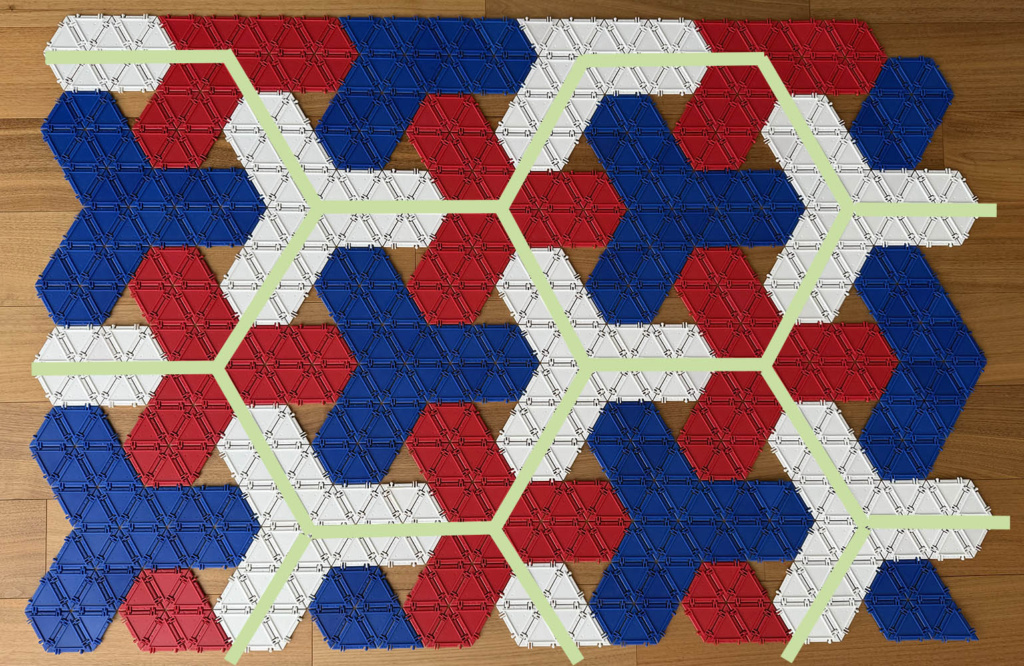
The other interesting thing about this pattern is that if you imagine removing the white net, you will find that the blue one is just sitting on top of the red one— they are not connected at all. The same would be true if you were to remove the red or blue lattice. Entangled nets with this property are called Brunnian.
I found all of this information in papers chemistry papers such as this one. These types of lattices, and variations on them, are the subject of study of topological chemistry, a fairly recent field which applies the findings of topology to understand the structure of matter.
Whether your interest lies in quilting, history, economics, or math, I highly recommend this exhibit if you find yourself in Southern California between now and the end of August 2026.